
It’s official, Finding your True North has broken ground!

Honoured Guests
Attendees heard special remarks from
Honourable Member of Parliament Mr. David Bexte,
Nathan Neudorf – Minister of Assisted Living Social Services,
Chantelle de Jonge – Honourable Member of Legislative Assembly,
Ingrid Wasylyshen with the Calgary Foundation, and
True North Board Chair, Josh Poteet.
Groundbreaking then commenced with a sacred blessing from Elder Francis Wolfleg, anchoring our groundwork in tradition and community wisdom.
Address by True North’s Executive Director
From Prevention to Permanence
My name is Courtney Helfrich, and I am the Executive Director of True North Society. Welcome to all and thank you all for being here today to share in this important milestone with us. It has been such a long time coming. Years and years of hard work and dedication by many before me, and by many of you standing here today. Thank you to our funding partners who have made today possible: CMHC and the Government of Canada, the Government of Alberta, the Calgary foundation, donors, neighbours, volunteers, staff and survivors and of course our construction team Chandos and Project Managers from Altus Group.
Today, is not simply about breaking ground on a new housing project. Today, is about recognizing prevention, safety, healing, stability, and hope. We are here to imagine a system that does not wait for a crisis before it responds, but rather, a system that recognizes that preventing violence, preventing houselessness, and preventing families from falling into cycles of instability are all connected.
Because if we truly want to change lives, we cannot only ask:
“Where can someone go after violence happens?”
We also have to ask:
“What can we do before violence happens?”
And:
“What can we do before a family reaches a crisis?”
That is where prevention begins. Prevention means creating communities where people have access to safe and affordable housing, economic opportunity, education, healthcare, childcare, and supportive, healthy relationships.
It means recognizing the warning signs of violence and providing support before a situation escalates.
It means teaching young people what healthy relationships look like.
It means ensuring people experiencing financial hardship have somewhere to turn before they are forced to choose between paying the rent and leaving an unsafe situation.
And it means understanding that housing stability itself is part of prevention.
When people have a safe, affordable place to live, they have options. And options can change outcomes.
For someone experiencing abuse, knowing that there is a safe and affordable place to go can make the difference between leaving and staying.
For a parent, stable housing can mean children do not experience repeated moves, houselessness, or disruption to their education.
For a young person, growing up in a stable home can help interrupt cycles of violence and instability before they are repeated in the next generation.
Prevention is not always dramatic. Sometimes prevention looks like a housing subsidy that keeps a family from becoming houseless. It may look like childcare that allows a survivor to keep her job, or access to counseling before trauma is inadvertently passed on to the next generation.
It can be an advocate who helps someone recognize that what they are experiencing is abuse, or a young person learning that control is not love.
And sometimes it’s engaging men and boys in healthy dialogue surrounding gender norms and unhelpful beliefs, creating a community where violence is no longer tolerated.
These interventions may never make the headlines. But they can change the trajectory of an entire life and shift an entire system.
And if violence does happen and someone needs to leave, the system must be ready.
That is where the continuum of care begins.
A survivor should be able to move from crisis to safety without falling into a gap.
Emergency shelter provides that first safe landing. It is the door that opens when someone has nowhere else to go. Emergency shelter saves lives, but emergency shelter is not the destination.
Survivors need transitional support and stability. They may need legal assistance. They may need trauma-informed counseling, childcare, or employment support.
And they need time. Time to breathe. Time to heal. Time to make decisions without someone else controlling those decisions.
Then comes another critical step:
permanent, affordable housing.
Because we cannot tell someone they are safe while placing them on a path toward houselessness.
We cannot ask a survivor to rebuild her life while making housing financially impossible.
And we cannot expect families to become stable when the foundation beneath them is constantly shifting.
Permanent affordable housing provides that foundation. It allows a survivor to keep her children in the same school. It allows a survivor to keep their family in the community where their natural supports are, and it allows a survivor to pursue employment or education, to establish routines to rebuild financial security.
And perhaps most importantly, it allows them to begin imagining a future again, with the ultimate goal as community stability and belonging.
It is the moment when a survivor no longer sees themself as someone moving through a system, but rather as simply a neighbor, a parent, a colleague, a student, a homeowner, a tenant or a friend. A member of the community.
They have a home. There is choice. There are connections and important relationships. There is opportunity.
That is what a true continuum of care looks like.
Prevention.
Early intervention.
Emergency safety.
Stabilization.
Transitional housing.
Permanent affordable housing.
Community connection.
Long-term independence.
And every part matters. Because if we invest only in emergency response, we will always be responding to crises. If we invest only in housing, without supportive services, people may still struggle to overcome the barriers created by trauma and violence.
If we invest only in services, without affordable housing, people may be supported but still have nowhere safe and permanent to live.
And if we invest only after crisis occurs, we miss the opportunity to prevent that crisis in the first place.
We need the whole continuum.
We need to invest upstream and downstream. We need to prevent where we can, protect when we must, support throughout the journey and create the conditions for long-term stability.
This is bigger than one building. It is bigger than one program. It is a different way of thinking about how we respond to domestic violence and housing instability.
When we invest in prevention, we reduce the number of people who reach crisis.
When we invest in emergency shelter, we reduce the number of femicides and ensure people have somewhere safe to flee to.
When we invest in transitional support, we give survivors the opportunity to heal and rebuild.
When we invest in permanent affordable housing, we create stability. And when we invest in community, we create belonging.
That is how we begin to break cycles, not by asking survivors to be stronger.
They have already been strong. We change the conditions around them so that they no longer have to be strong simply to survive.
So today, as we build, let us build with the entire journey in mind.
Let us build systems that prevent violence and housing instability whenever possible. Let us build doors that open in moments of crisis. Let us build bridges from shelter to stability.
And let us build communities where survivors are not defined by what happened to them, but by everything they already are and are capable of becoming.
Because the goal is not simply to help someone escape. The goal is to make sure they have somewhere safe to go. Somewhere stable to stay. Someone to walk beside them. And ultimately, the freedom to choose where their life goes next.
So as we turn the first shovels of soil today, we are doing more than beginning construction. We are creating a place where people can find safety, rebuild their lives, and look to the future with confidence. This project reflects our shared belief that everyone deserves a safe home, compassionate support, and the opportunity to thrive. Together, we are building stronger individuals, stronger families, and a stronger community.”
Thank you.

Honourable Member of Parliament Mr. David Bexte

Nathan Neudorf – Minister of Assisted Living Social Services
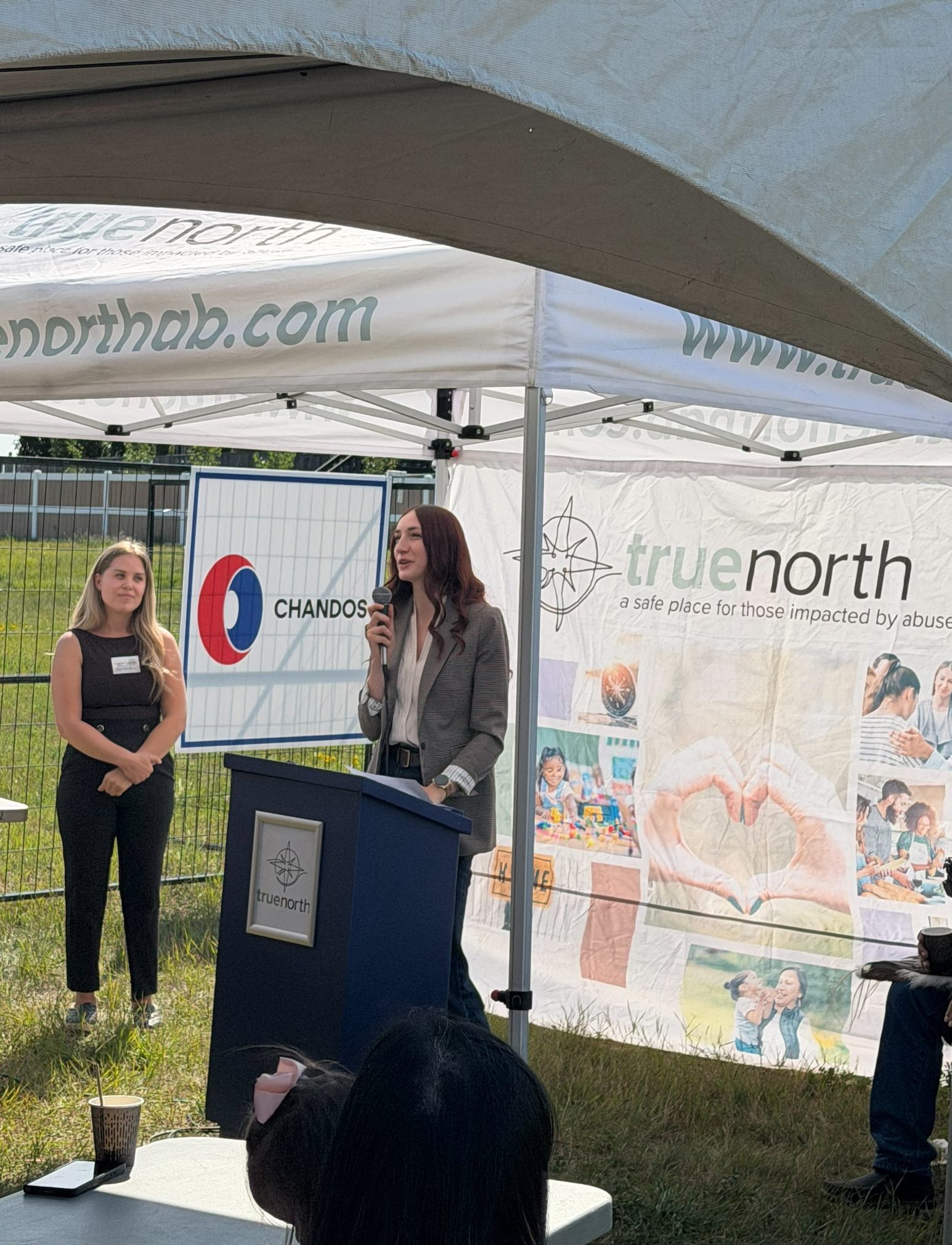
Chantelle de Jonge – Honourable Member of Legislative Assembly
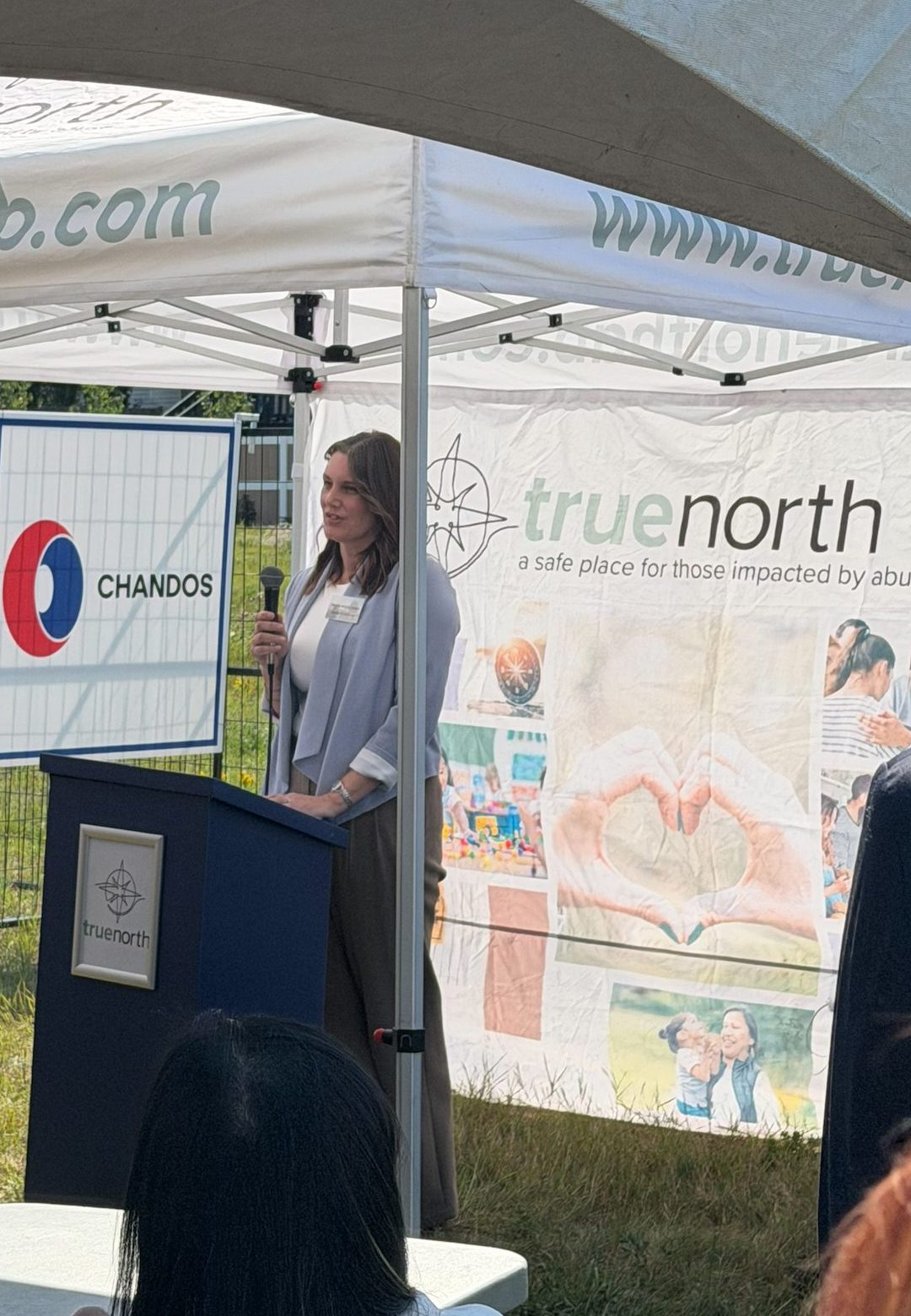
Ingrid Wasylyshen with the Calgary Foundation.

Left: Board Chair Josh Poteet
Right: Vice Chair Jennifer Franssen
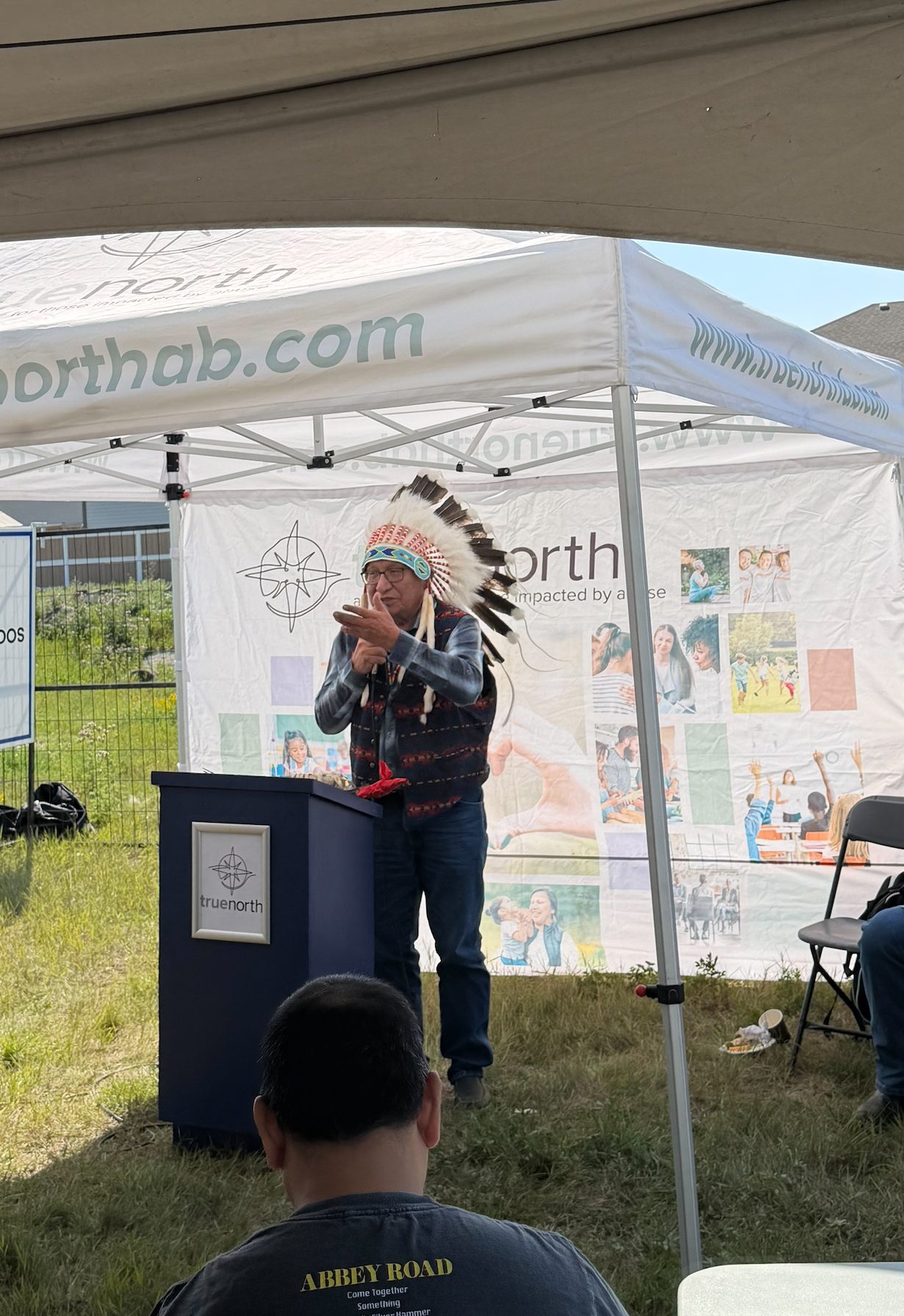
Elder Francis Wolfleg

Courtney Helfrich, True North Executive Director
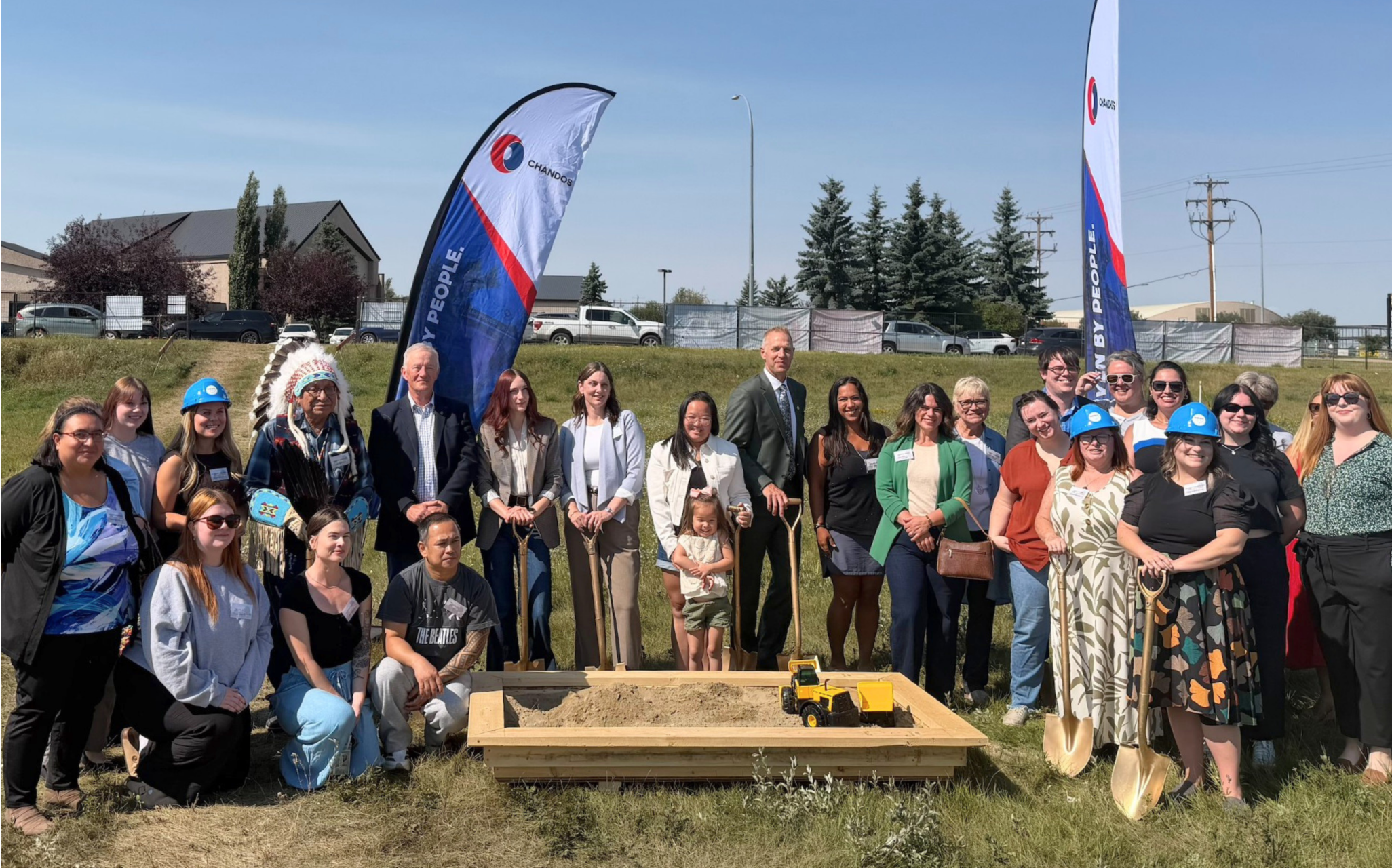
Above: MP David Bexte, Minister Nathan Neudorf, MLA Chantelle de Jonge, Ingrid Wasylyshen, Elder Francis Wolfleg, True North Leadership, True North Members of the Board, True North Staff.
Thank You
Thank you to all our donors and supporters who have supported the development of this project: Federal Government Partners, Provincial Government Partners, Canada Mortgage and Housing Corporation, Altus Group, Chandos Construction, Alberta Housing Partnership Program, Calgary Foundation, community members, advocates, and long-term supporters.
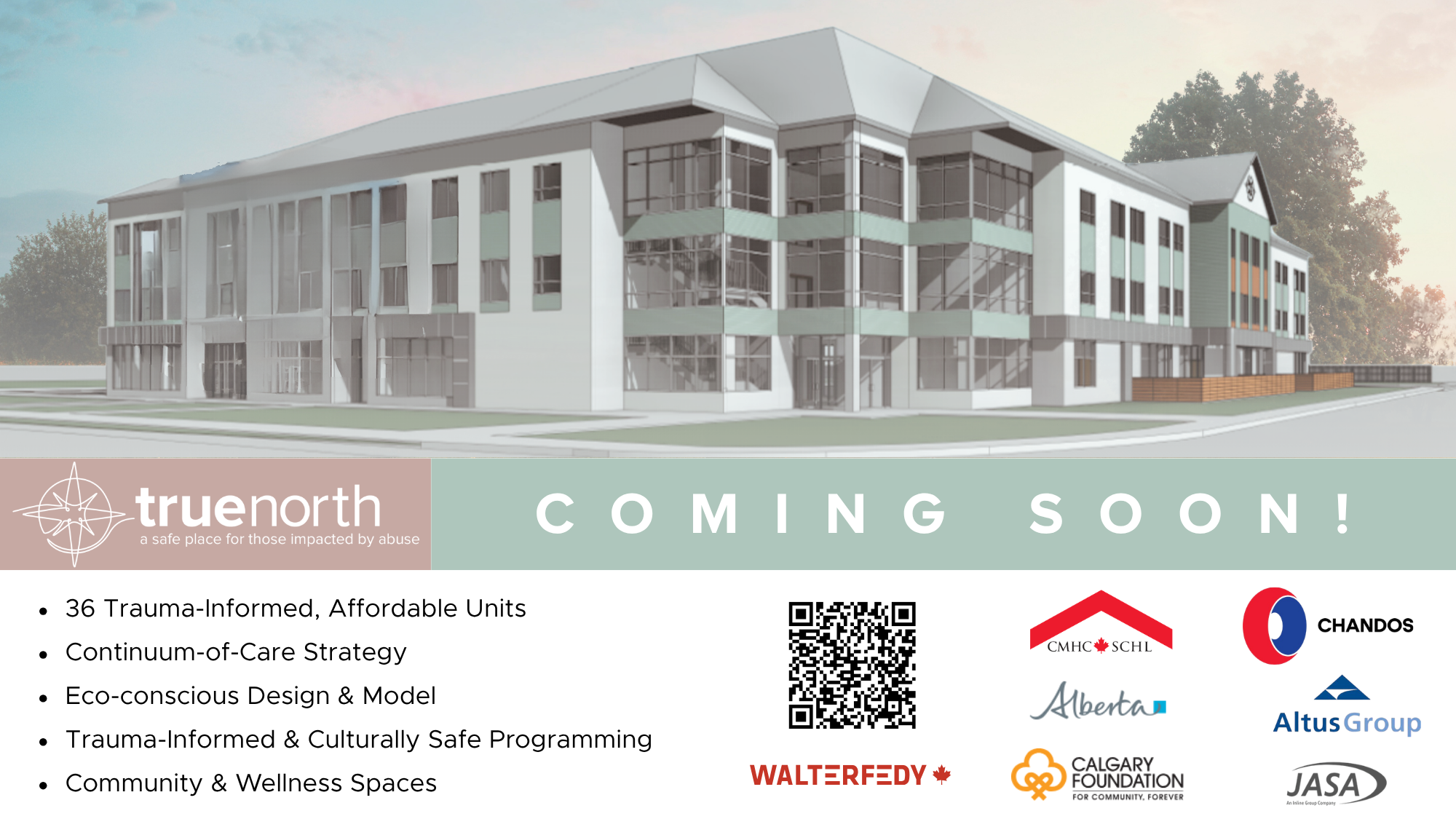
Groundbreaking is not the finish line; it is the starting line for everything the building makes possible.
The True North Society takes pride in inclusivity and is proud to serve all individuals and families regardless of age, gender identity, or gender expression. We strive to respect our cultural differences and the experiences that make each of us unique. In 2017, True North was awarded the provincial Alberta Inspiration Award in recognition of our inclusive practices. True North’s services are accessible to men, women, and anyone within the LGBTQ+ community experiencing domestic violence. In addition, we cooperate with the Male Domestic Abuse Outreach Program offered through the Calgary Counselling Centre, which provides longer-term counselling, advocacy, and support programs for men.
